
Pallet Washer

Industrial Pallet Washer Technical Specifications & Model Comparison
| Model | PW-50 | PW-58 | PW-75 | PW-120 |
| Washing Capacity | 30 – 120 Pallets/hr | 120 – 150 Pallets/hr | 150 – 200 Pallets/hr | 200 – 300 Pallets/hr |
| Degree of Soiling | Light to Medium (Dust, liquids) | Medium (Food residue, oil) | Heavy (Stubborn residue) | Heavy (Stubborn residue) |
| Dimensions | 4500 x 1350 x 2260 mm | 5800 x 2200 x 1700 mm | 12600 x 1950 x 1800 mm | 18200 x 2590 x 2430 mm |
| Compatible Pallet Sizes | Up to 1219 x 1016 mm (48 x 40″) | Up to 1500 x 1500 mm (59 x 59″) | Up to 1219 x 1219 mm (48 x 48″) | Up to 1219 x 1219 mm (48 x 48″) |
| Washing Zones | Main Wash + Fresh Rinse | Pre-Wash + Main + Rinse | Pre-Wash + Main + Sanitize | Pre-Wash + Main + Sanitize |
| Heating Method Options | Electric / Steam | Electric / Steam | Electric / Steam | Electric / Steam |
| Water Consumption | 150 Liters/hour | 200 Liters/hour | 120 Liters/hour | 120 Liters/hour |
| Material Construction | 304 / 316 Stainless Steel | 304 / 316 Stainless Steel | 304 / 316 Stainless Steel | 304 / 316 Stainless Steel |
| Control System | Button Control / Siemens PLC | Button Control / Siemens PLC | Button Control / Siemens PLC | Button Control / Siemens PLC |
| Drying System | Optional | Optional | Air Blow-Off (70% – 80% Dry) | Air Blow-Off (80% – 95% Dry) |
| Required Operators | 2 Operators | 2 Operators | 2 Operators | 0 – 1 |
*Note: The PW-75 and PW-120 models achieve significantly lower water consumption (120 Liters/hr) because their standard Air Blow-Off modules strip residual water from the pallets and return it to the tanks, virtually eliminating drag-out water loss.
Core benefits of our pallet washer
Optimal cleaning
Our pallet washer sets multi-angle spray nozzles, ensuring optimal cleaning coverage for every pallet area. With the right water temperature and detergent assistance, the powerful stainless steel centrifugal pumps deliver sufficient pressure and flow to thoroughly remove contaminants.
Easy to operate
The control panel is tailored to your operator’s preferences, enabling them to easily operate it via physical buttons or an HMI. In addition, the removable access doors and pull-out filter allow operators to conveniently clean the interior of the washing tunnel and water tank.
Exceptional safety
The built-in sensor system effectively prevents damage to the machine from water shortages or excessive current fluctuations. Besides, safety interlocks and emergency stop buttons prevent employees from injury during emergencies or due to accidental operation.
Energy-saving
The efficient water circulation system enables water mixed with chemicals to rapidly return to the tank after dual filtration, instead of entering the sewer directly. Meanwhile, the heavy-duty tank walls can reduce heat loss, further minimizing the machine’s energy consumption.
Explore our pallet washer series


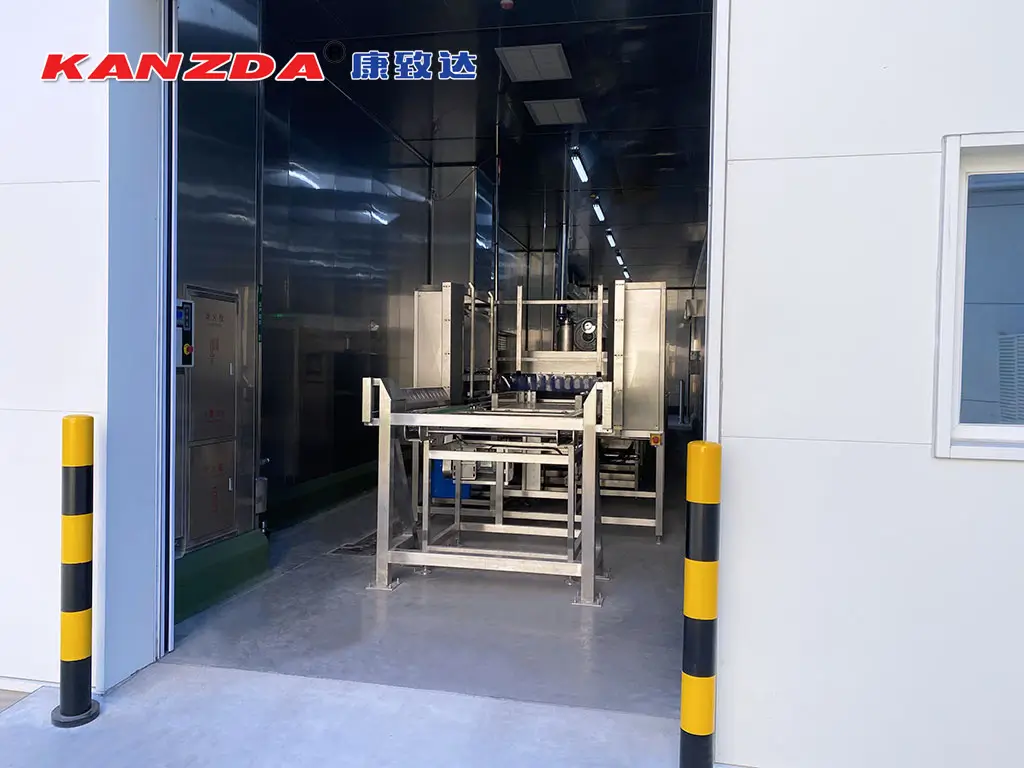


industry reference for pallet washers
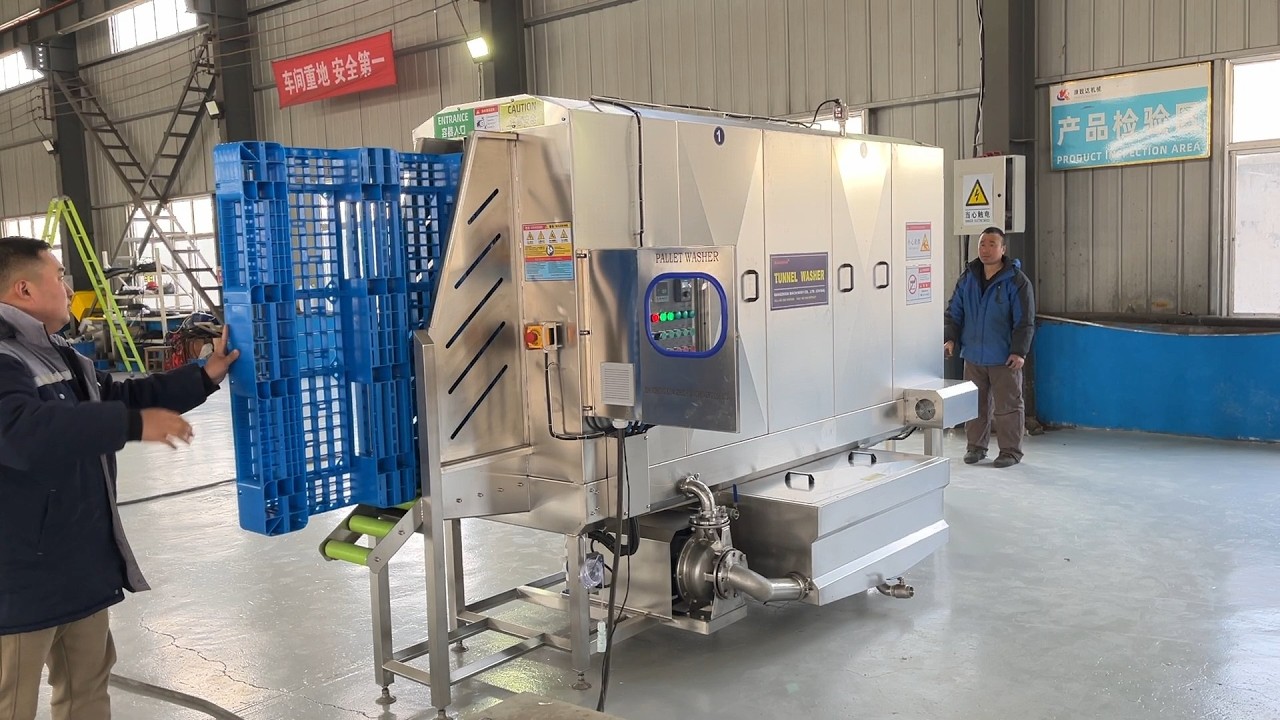
egg
Despite the egg packing facility’s extensive avian influenza prevention measures, farmers still want to ensure the pallets and dividers can be returned to farms in a biosecure state, eliminating the risk of cross-contamination that may arise during their transfer between farms and the packing centre. The Country Lane Foods previously attempted manual handling with a pressure washer, which was time-consuming and ineffective at disinfecting pallets.
The industrial pallet washer processes pallets and dividers according to a fixed protocol. The dosing pump adds disinfectant to the tank or the fresh water rinse system at operator-specified rates, effectively removing potential biological threats of the pallet.
Snacks
Due to the large size of plastic pallets and the substantial amount of starch and seasonings on their surfaces, few snack manufacturers allow employees to clean them manually. Heavy pallets and excessive dust may cause employee injuries, which does not comply with the facility’s safety guidelines.
To settle this problem, we designed this pallet washing machine featuring two independent wash zones capable of handling pallets with a width approaching 1500 mm. The powerful combination of high-flow hot water and detergent can deep-clean hard-to-reach internal areas, ensuring no remaining residue.


Bakery
Most wholesale bakeries use plastic pallets to transport packaged products like bread and buns. After these empty pallets return to the factory from the store, the plant engineer arranges for employees to clean them, which can prevent contamination of product packaging during the next round of use. Although employees can remove these light stains from the pallet surface, they cannot accelerate the drying process.
The washer with a drying option can blow off most of the water from the pallet surface, reducing the time required for complete drying. In addition, it can reach a higher throughput, thereby improving the overall working efficiency of the production team.
Supply Chain
To reduce expenses and risks, many customers prefer the pallet pooling service of the supply chain provider. Service centers inspect, clean, disinfect, dry, and repair these returned pallets in accordance with strict local sanitation regulations, such as CGMP and FSMA. Since the facility requires cleaning over 250,000 pallets annually, a conventional pallet washer would be an extremely cumbersome choice. Since the operators must manually lift pallets onto the equipment and stack them after drying, this will bring a big burden on them.
The KANZDA pallet washing system allows operators to load stacks of pallets at once using forklifts, with automatic stacking upon completion of the process. The de-stacker and stacker each handle nearly 15 pallets per cycle, significantly reducing operator workload while further streamlining the entire washing process.
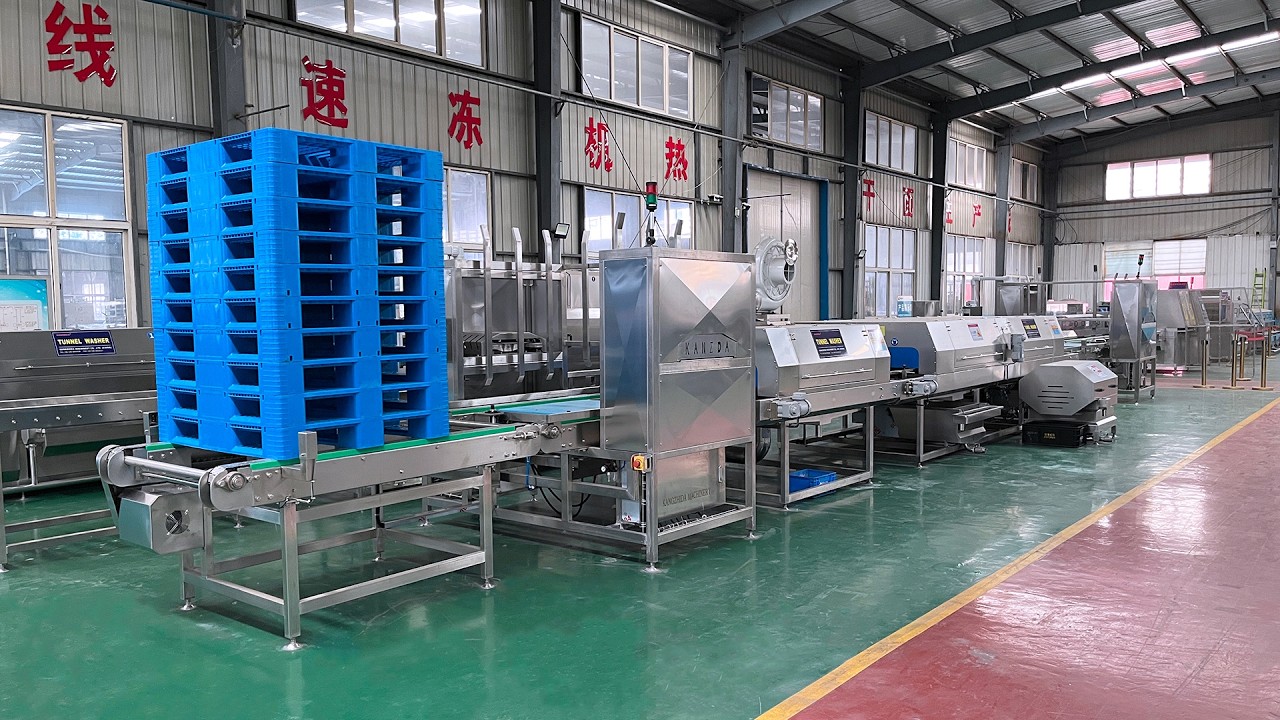
Workflow of a basic pallet washer
To guarantee complete microbiological safety, the KANZDA workflow is engineered around the Sinner’s Circle principle, perfectly balancing four essential cleaning elements: Mechanical action (high-pressure spray), Thermal energy (heated water), Chemical action (precise dosing), and Time (VFD-controlled retention).
Pre-wash
The pre-wash zone uses high-flow hot water to rinse pallets, thereby softening stubborn stains and removing most low-adhesion contaminants.
Main Wash
The main wash zone uses high-pressure hot water mixed with detergent to clean pallets, removing stubborn stains such as grease, meat residue, and forklift marks.
Rinse
As the final step in the cleaning process, the rinse zone uses high-flow cold water for secondary cleaning of pallets, further removing residual stains.
Sanitize
The sanitize zone uses low-flow fresh water mixed with disinfectant to rinse pallets, ensuring compliance with hygiene standards while minimizing water consumption.